
In the modern-day age of high-speed cabinetry there comes exactness and efficiency which may make or break the end product. Make cabinets that fit every time, reduce waste, cut production time and still produce beautiful cabinets. This is precisely what CNC woodworking technology presents to contemporary cabinet makers a new technology that innovates accuracy and craftsmanship in the woodworking business.
When you have ever found even minimal misalignment or inconsistency in the cabinet doors or drawers, or have you been frustrated with time-consuming manual measurements? CNC technology is the game-changer that you have been seeking. We delve below and explore the ways CNC woodworking enhances cabinet design by automating, ensuring precise measurements, and integrating digitally and minimizing the impact of human error.
Understanding CNC Wood Routers
Before proceeding further, it is important to understand What CNC wood routers are and how they work.
CNC Machine: Computer Numerical Control. It’s called computer numerical control because the machine uses numbers to track its position along each axis and computer programs to determine its motion. Rotating cutting tools are used on the moving bed to cut, carve and shape various wooden objects. This technique allows for very fine and precise work that would be challenging, if not impossible, to do by hand. CNC routing is especially helpful for cabinet making as it will cut wood exactly to the digital design specifications so that each piece, whether taking the form of a large panel or Complicated molding, is consistent and fits perfectly.
Why Accuracy Matters in Cabinet Design
The cabinets are not just for storage, they’re functional decor. Even a small error can lead to:
- Misaligned doors and drawers
- Gaps between panels
- Weak joints that reduce durability
- A poor overall finish
These problems are removed with CNC woodworking technology, where there is a precise cut and perfect fit every single time.
How CNC Woodworking Improves Cabinet Design Accuracy
Digital Precision in Every Cut
CNC woodworking works with CAD (Computer Aided Design) files that tell the machine where to make each cut, drill and carve. Compared to hand tools, there is less variation in the dimensions of a CNC-produced part. This digital precision means that every cad line has its full computer integrity from our custom cabinet design to your build, so each panel, joint and edge is precisely cut for the perfect fit. The tighter the fit, the stronger it is (and all this makes cabinets more durable and visually appealing.
Consistency Across Multiple Pieces
When you’re making an entire set of cabinets, it can be challenging to keep everything consistent when using conventional woodworking. CNC cutters always make the same cuts according to the design file, because it does what the computer says. Whether it is drawer fronts in a batch, shelves of the same size or side panels that match, everything is cut to the same standard. The same appearance of a professionally finished cabinet that would be difficult or impossible to achieve by hand again doesn’t just improve quality control, but gives the final cabinets a professional-quality look.
Complex Designs Made Simple
Complex cuts, curves, and intricate carvings are difficult for Traditional tools to cut through. CNC wood machines have brought great advantages to the woodworking industry, as well as to architecture. Cabinet makers can create beautiful moldings, work on their own designs, patterns, or a unique panel shape without much work. This allows for creative, highly customized cabinet styles to be produced while ensuring that all the details are accurate.
Reduced Human Error
Even the best of woodworkers will make small mistakes measuring, cutting, or during assembly. These small errors can add up and result in drawers that don’t close properly, doors that are not plumb, or cabinets that lack structural Stability. CNC technology reduces a lot of these risks by cutting pieces automatically. Because machines do precisely what the digital instructions tell them to, this room for error is reduced and ultimately produces more accuracy (and thus, reliability) in the final product.
Faster Prototyping and Adjustments
Designers frequently require modifications to complete a cabinet job. It can be time-consuming and labor-intensive to make adjustments to prototypes when using traditional approaches. This is made easier by CNC woodworking, which allows extremely quick trials of new measurements, designs or features. Even if it’s not perfect, it feels better on a digital version, you can update the digital file nearly in real time and re-export your pattern pieces. This flexibility speeds up editing time while making adjustments more accurate, which translates into a better project workflow.
Price of CNC Machines: Cost Reduction Over Time
While CNC machines may be expensive to purchase and set up, they save you money and maximize profits in the long term. Auto processing saves labor costs from manual cutting and assembling. Accurate cutting minimizes waste material, saving you costly wood and hardware expenditure. Reduced error rates translate into less rework and reduced costly delays and repairs. CNC also increases production, so one can finish more cabinets in less time. In general, when the custom cabinet shops weigh long-term gains and increased productivity against the initial CNC cost, the cost is offset by increased return on investment.
Best Practices for Maximizing Results with CNC Routers in Furniture Making
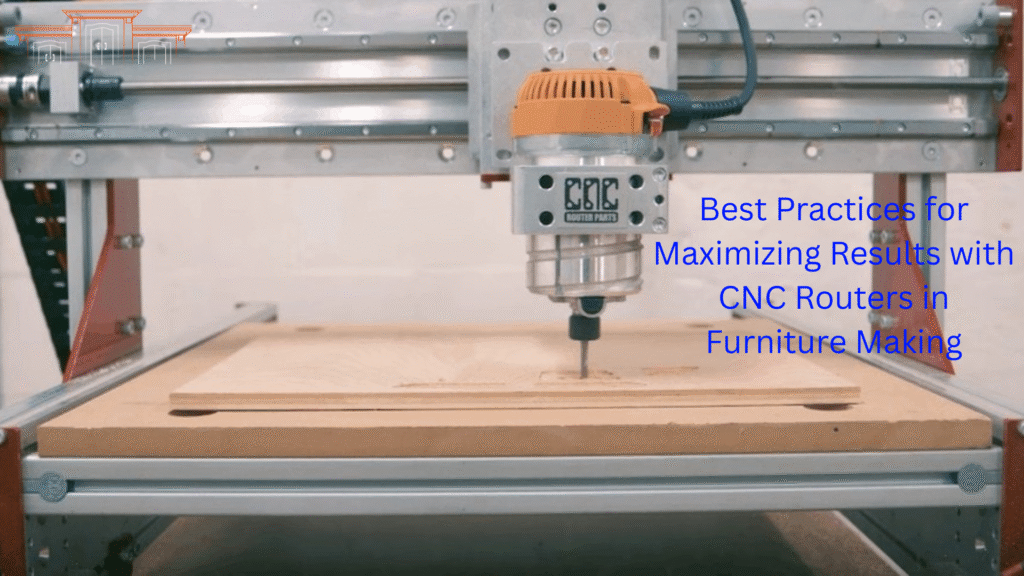
In the realm of furniture and cabinetry construction, the power of CNC woodworking machines can only be leveraged to its best potential when best practices are followed that ensure absolute precision, closest tolerances and highest quality output. These back-to-basics approaches keep production running like a well-oiled machine from design to end product.
Precise CAD Modeling
Successful CNC woodworking begins with accurate and detailed digital design done in CAD (Computer Aided Design) software. Taking the time to create your models in the CAD system is very important as these become the blueprint for the CNC machines that build them. Spend some time on a good digital design, and errors fade away: cuts, joinery, details all come out just as they’re put in. Moreover, CAD modeling helps designers to visualize the final product, make changes at ease and prevent expensive modifications during machining.
Routine Machine Calibration
How to take care of your CNC router. Keeping your CNC router in great condition, with regular servicing and calibration, is important. The machine’s precision can be influenced by tool wear, temperature fluctuation and vibration over time. Routine Calibration Standard alignment Cutting tools and axes are calibrated, making certain that each piece of material is cut to tight tolerance standards required for cabinetry. Preventative maintenance will also help to prevent a breakdown that could, in turn, extend the downtime of the machinery while production schedules are on track.
Tool Selection
It is crucial to choose the correct cutting tools in order to make high-quality surface finishes and features. Various bits apply to different tasks: a straight bit is ideal for simple edge cuts, a spiral bit is used in chipboard and other soft material cutting, and a V-bit is perfect for decorative carving. Use the right blade for what is being cut there, and it helps with the look and even long-term strength of your cabinets. Furthermore, inspections and replacement of worn tools help to avoid material flaws and verify a clean cut.
Test Cuts
Performing test cuts on a piece of scrap wood can be a great way to prevent errors before you kick off final production. These tests allow you to validate the accuracy of machine setup, cutting depth, feed rates and tool paths. Test cuts allow you to troubleshoot problems before you ruin expensive final material. They also offer a precise editing function which provides tool settings for the best cutting quality and surface finish to make perfect cabinets.
Optimized Material Layout
The most important factor for saving money in the woodworking industry is the efficient use of material. The use of nesting software to position the parts closely together on wood panels minimizes waste by taking maximum advantage of the material. This rigorous scheduling minimises waste off-cuts, reduces material wastage and increases overall project profitability. Optimised nesting can also reduce machining time by minimising tool travel between cuts.
Skilled Operators
CNC routers handle a broad range of woodwork, but we will still need some experienced supervisors. The job of a skilled technician includes reading CAD/CAM files, fixing the machine when it fails and taking good care of this high-performance equipment. Their knowledge is necessary to make the machine work reliably, accurately and with good quality output. Reputable operators can also minimize the risks of potential issues during production and adjust things on the fly to ensure projects stay on target.
Conclusion
CNC wood cutting machine technology has brought precision, repeatability & swift performance to the production of Cabinets. Whether removing the chance of human error, making intricate designs possible or increasing prototyping speed, CNC machines have well and truly become an indispensable part of today’s cabinetmaker’s toolkit. The upfront costs of CNC equipment is substantial, but the long-term gains of reduced waste, increased productivity and flawless quality more than pay for themselves. Woodworkers and businesses that want to cut their work time in half and still maintain the quality even with large masses of bulk orders would find this option most attractive. Realize your vision with the exacting accuracy and beautiful cabinetry only available through the professional CNC services provided by Custom Cabinets of Texas, where technology meets tradition.
FAQ’s
CAD/CAM programmed CNC Machines that take all of the guesswork and eyeballing off the table, leaving you with exact cuts and joints, no more measuring by hand or doing things a bit too tight that may restrict your components.
Yes. Because CNC machines generate such perfect-fitting joints and exacting cuts, the overall structure is much stronger and will last years longer than cabinets made with traditional manual tools.
Absolutely. Cutting, drilling and shaping is done completely by CNC computer automation, which greatly reduces the time needed to produce while maintaining high accuracy and quality.
Not at all. While large shops benefit greatly from mass production efficiency, smaller cabinet makers also gain precision, customization options, and reduced material waste.
The price ranges depending on size, features and capacity. Entry-level machines may sell for a few thousand dollars each, while industrial-grade routers can cost tens of thousands. But it’s the delayed ROI that often pays off.
Yes. One of the most beneficial aspects of CNC is the ease with which bespoke patterns, fancy shapes or personalized features can be created while still maintaining accuracy.